

An individual taxation withholding rate determines how much tax can be taken before payment reaches an individual. A smaller amount appears on an employee’s payslip than expected. A client sends less than the sum on an invoice.
What Is an Individual Taxation Withholding Rate (PAYG)?
During the financial year, PAYG withholding tax works as tax paid ahead. In the Australia taxation system, the Australian Taxation Office (ATO) progressively removes income tax from employee wages, which avoids large tax liabilities at year-end.
For staff, directors’ fees, or a supplier without an ABN, you generally have to meet employer payroll tax obligations, withhold tax and send it to the ATO.
How to Calculate Your Individual Taxation Withholding Rate
When you match a payment with its payroll arrangement, ATO tools or payroll systems can calculate PAYG withholding.
Using ATO Tax Tables
The PAYG withholding tax table shows the tax deducted from wages. Check that the Australian Taxation Office (ATO) table matches the payment frequency, then apply current PAYG withholding rates to deduct the correct amount. Under ATO PAYG withholding regulations, weekly, fortnightly and monthly wages each use separate rates.

These tables include worker groups across the following pay arrangements.
- Income frequencies: The tables give rates for weekly, fortnightly, and monthly wages under ATO PAYG withholding regulations.
- Updated rates: ATO updates tables periodically when income tax rates, offsets, and thresholds change.
- Special groups: freelancers, non-residents, and working holiday visa holders may use special PAYG tax tables because different tax treatment applies.
Using Payroll Software
The Australian Taxation Office (ATO) says you must report PAYG withholding tax through Single Touch Payroll (STP) in real-time in each pay cycle. This keeps payroll reporting simpler and supports compliance.
By applying PAYG withholding tax rates automatically, ATO-compliant payroll software can cut calculation mistakes. It updates the calculation when tax laws change. Check PAYG tax rate updates regularly. Dependable payroll systems keep processing accurate, meet PAYG withholding obligations, and make tax reporting more efficient.
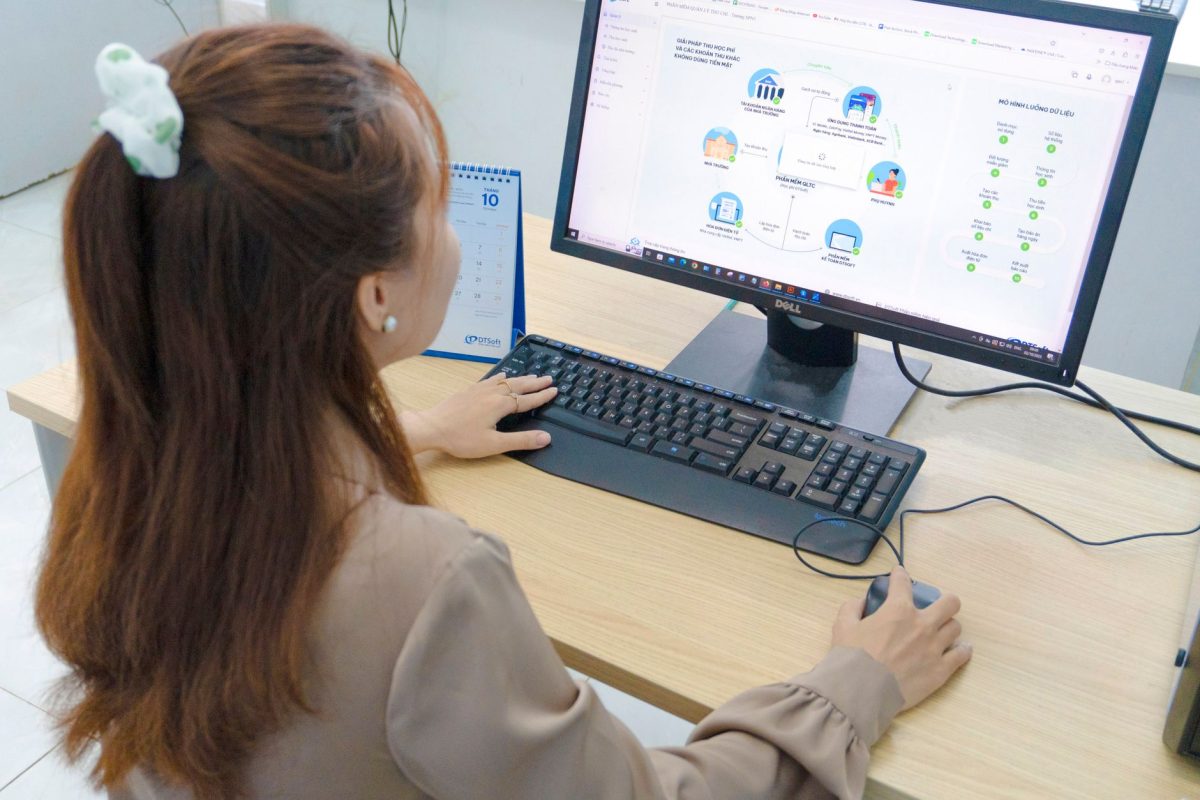
Pick the method that suits how complex your payroll is.
- Use the relevant ATO tax table when the pay arrangement is straightforward and you can confirm the correct worker category.
- Use the full ATO tax withheld calculator when declarations, residency status, tax offsets, Medicare levy variations or study loans affect the result.
- Use ATO-compliant payroll software when you run payroll regularly and need calculations, updates and reporting managed in one workflow.
Manually, use the ATO PAYG withholding tax calculator or PAYG payroll tax table. If declarations, a worker’s residency status, tax offsets, Medicare levy variations or study loans affect the outcome, use the full ATO tax withheld calculator. Use the employee’s current TFN declaration and any applicable withholding/Medicare levy variation declaration.
Key Factors That Determine Withholding Rates
Current payee details and payment facts can alter the amount you must withhold.
Gross Earnings and Pay Frequency
Use gross earnings and pay frequency first, since they set your withholding before declarations.
- your payees normal earnings
- any allowances and irregular payments you will add.
Claiming the Tax-Free Threshold
Australian residents for tax purposes pay no tax on the first $18,200 of yearly income. Where a payee receives income from multiple payers, their threshold claim turns on expected earnings. That amount is the tax-free threshold.
- Income from all payers: if your payee is certain their total annual income from all payers will be less than $18,200, they can claim the tax-free threshold from each payer.
- Foreign residents: foreign residents can’t claim the tax-free threshold.
- Main employer: claim the tax-free threshold from the employer you expect to earn the most from.
- Second job: do not claim it from a second job, because this will likely result in a tax debt at the end of the year.
Residency Status for Tax Purposes
Choose rates from a payee’s residency declaration. If they declare they aren’t an Australian resident, apply foreign resident withholding rates.
- Tax file number declaration
- Withholding declaration
With a relevant working holiday maker visa, the rate hinges on your status as a Registered employer. If you’re registered, apply Working holiday maker withholding rates of 15% on the first $45,000 of income earned. That registration changes the rate.
For income over $45,000, foreign resident withholding rates apply. If you’re unregistered, those rates apply from the first dollar of income earned.
Study and Training Support Loans
Extra withholding may need to be taken for certain debts. If your payee has a Study and training support loan debt, check their declaration. This covers Higher Education Loan Program (HELP), VET Student Loan (VSL), Financial Supplement (FS), Student Start-up Loan (SSL), ABSTUDY SSL, Australian Apprenticeship Support Loan, or formerly Trade Support Loan debt.
The relevant year’s minimum repayment threshold triggers repayments. If a payee has deferred the debt, repayments go through the tax system. They must tell you about it on their Tax file number declaration or Withholding declaration.
Medicare Levy Variations
Some prescribed persons, including people on certain pensions, benefits or service, may claim a Medicare levy exemption or variation.
- repatriation and Centrelink pension or benefits recipients
- members of the Australian Defence Force (ADF).
Eligible low-income earners with dependants may claim a Medicare levy variation, but your payee must lodge a Medicare levy variation declaration with their Withholding declaration.
Salary Sacrifice Arrangements
Salary sacrifice arrangements are also known as salary packaging or total remuneration packaging.
With salary sacrifice arrangements, employees swap part of their salary for non-cash benefits, including extra superannuation contributions. That can boost tax efficiency for the business, while reduced taxable income can lower the PAYG withholding tax deducted.

Withholding for Different Worker and Payment Types
The PAYG withholding figure comes down to the worker’s details and the type of payment you’re making.
Standard Employees (Full-time, Part-time, Casual)
For standard employees, choose the table that fits when and how you pay them. If you’ve got their TFN declaration, the answers on it set the rate. Full-time, part-time and casual status don’t alter it.
- From 1 July 2026, Schedule 10 applies to daily and casual payments when the employee has claimed the tax-free threshold. For daily earnings of $193.62, ignore the cents and use $193, which gives $25.00 to withhold. A claimed $500 tax offset cuts this by the daily offset value of $2.00 ($500 × 0.0038, or 0.38%, rounded to the nearest dollar), leaving $23.00.
- Full-time and part-time employees who are rostered regularly will generally use the weekly or fortnightly tax table.
- Where a casual bartender is paid hourly by 2 separate entities and claims the tax-free threshold from both, each employer uses the daily and casual table.
- Working holiday makers use Schedule 15 regardless. If no TFN is quoted, withhold 47% for a resident or 45% for a foreign resident. An employee who has applied for a TFN has 28 days to provide it, and the payer must notify the ATO if no valid declaration is received within 14 days.
A casual worker follows the same PAYG withholding tax rates as a permanent employee. Their income level decides the amount.
Contractors and Suppliers Without an ABN
The Australian Taxation Office generally requires tax to be withheld from a supplier who doesn’t quote an ABN when the payment exceeds $75 excluding GST, then paid to the ATO. The current rate is 47%, the top rate of tax.
An absent ABN puts you in charge of withholding for that payment. When a consultant invoices you for a service without one, you collect tax temporarily for the ATO, holding back part before sending it to the tax office.

This table sets out whether withholding applies, using the quoted ABN and the size of the payment.
| Situation | What the payer must do | Rate or threshold |
|---|---|---|
| Supplier quotes a valid ABN | Generally no withholding required | Not applicable |
| Supplier doesn’t quote an ABN, payment over $75 (excl. GST) | Withhold and remit to the ATO | 47% |
| Supplier doesn’t quote an ABN, payment $75 or less (excl. GST) | No withholding required | Not applicable |
These rules draw a line between payments you withhold from and those you don’t.
Issue the supplier a payment summary and keep separate records. You can’t claim amounts withheld this way as a GST credit.
Use the PAYG payment summary, withholding where ABN not quoted (NAT 3283), a 213KB PDF. Give the supplier this form when you make the payment or as soon as practicable afterwards. It has 2 copies, one supplied to the supplier and the other retained by you. Both parties must keep their copy for 5 years.
The payment summary isn’t lodged with the ATO, though you must lodge the PAYG withholding where ABN not quoted, annual report (NAT 3448). Record figures in whole dollars only, with $122.76 recorded without cents. You may use a signed English receipt, remittance advice or similar document instead, if it shows your name and ABN/WPN, the supplier’s name and address if known, the payment date, the total payment including the market value of non-cash benefits, and the amount withheld.
Sole Traders with Other Employment
When you hold a wage role alongside sole trader activity, standard tax tables already take PAYG from your wages. Any side income joins your salary at tax time, and your marginal rate is then worked out across the combined income for tax purposes.
For example. If you earn $70,000 in salary and $20,000 from sole trader work in the same year, the extra $20,000 sits in the $45,001 to $135,000 bracket under the 2026-27 resident tax rates. At 30% tax plus the 2% Medicare levy, around $6,400 is owed on the side income alone.
Special Payment Scenarios
Certain amounts paid after an employee dies have no withholding. This includes salary, wages, commissions, bonuses and allowances, even where the employee earned that income before death.
For other non-standard payments, turn to a separate schedule or table. The ATO’s 15 withholding schedules and 12 tax tables apply from 1 July 2026, after tax cuts in the Treasury Laws Amendment (More Cost of Living Relief) Act 2025 and yearly indexation of study and training support loan repayment income thresholds.
- Regular payments use the Weekly (NAT 1005), Fortnightly (NAT 1006), Monthly (NAT 1007), or Daily and casual workers (NAT 1024) tables, with Schedule 1 formulas (NAT 1004) where required. For Medicare levy variations, use weekly no and half levy (NAT 1008), fortnightly no and half levy (NAT 74228), or the weekly, fortnightly and monthly Medicare levy adjustment tables (NAT 1010, 1011 and 1012).
- For super payments, use Schedule 12, super lump sums (NAT 70981) or Schedule 13, super income streams (NAT 70982). Study and training support loan withholding uses Schedule 8 formulas (NAT 3539) and the weekly, fortnightly and monthly STSL tables (NAT 2173, 2185 and 2186).
- Schedules for particular industries and payees include Schedule 2, horticultural or shearing industry (NAT 1013), Schedule 3, actors, variety artists and other entertainers (NAT 1023), Schedule 9, seniors and pensioners (NAT 4466), and Schedule 15, working holiday makers (NAT 75531).
- Payment-type schedules include Schedule 5, back payments, commissions, bonuses and similar payments (NAT 3348), Schedule 6, annuities (NAT 3350), Schedule 7, unused leave payments on termination (NAT 3351), and Schedule 11, employment termination payments (NAT 70980). Other arrangements use Schedule 4, return to work payments (NAT 3347), Schedule 10, payments under voluntary agreements (NAT 3352), and Schedule 14, additional amounts under an agreement to increase withholding (NAT 5441).
Workers under the PALM scheme and Seasonal Worker Programme / Pacific Labour Scheme use dedicated ATO rate pages for withholding, not these tax tables.
Conclusion
Australian employers need payroll records, tax rates and reporting arrangements to remain aligned for accurate PAYG withholding. If those parts drift, calculation mistakes can follow.
- A consistent approach can reduce the risk of penalties and support smooth payroll processing year-round.
- Regular checks of ATO PAYG withholding tax rate updates help you stay current and avoid calculation errors.
- For Australian employers, ATO-compliant payroll software can make tax reporting easier, reduce manual errors, and help ensure PAYG withholding obligations are met on time.
- Regular software updates and automated calculations support consistent payroll processes and can help avoid issues during audits.
Match each payment to workers’ declared circumstances and payment type. Use current ATO guidance or ATO-compliant payroll software, keeping payroll records, tax rates and reporting arrangements consistent. It can make tax reporting simpler, minimise mistakes from manual handling, and support meeting PAYG withholding obligations by their deadlines. If workers fall outside standard tax tables, check the separate ATO rate page before processing payment. Regularly check ATO PAYG withholding tax rate updates to keep each individual taxation withholding rate on track.
Explore More Topics: